

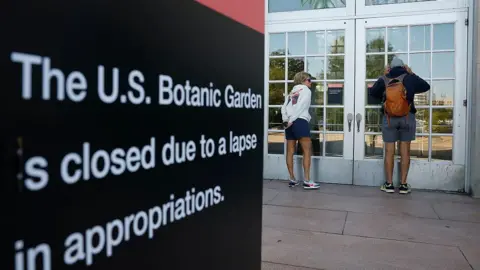
Greetings to the latest installment of the budget impasse. Late Tuesday, the Senate chamber could not ratify a funding measure that would have maintained government funding, representing the first comprehensive government closure in nearly seven years.
At some point, this shutdown – like all previous ones – will end. The duration could be days; or perhaps weeks, but eventually, as constituent demands and electoral consequences intensifies, either party will back down.
Below are potential outcomes for potential ways this may unfold.
Rapid Democratic Defect
Senate Democrats defeated a conservative appropriations package that would have funded the government until November, but that vote may have set the stage for their eventual defeat.
While forty-four Democrats and Republican iconoclast Rand Paul rejected the measure, several party members and an independent senator supported the conservative bloc.
The Maine independent remains an unpredictable factor. The Pennsylvania Democrat has been taking unconventional positions for nearly a year. But Senator Cortez Masto, while not a liberal firebrand, is not the usual party rebel.
She is, however, an upcoming campaign in a constituency that the former president won in 2024 and which has been slowly trending Republican for some time.
Via her comments justifying her position, she expressed concern about the financial impact the shutdown would have on her state. She might also be worried about the impact it could take on her re-election bid as a current officeholder on the ballot when the electorate grows discontent.
She's not the sole representative of her political organization from a swing region who will be facing re-election in 2026. Democratic senators in the Peach State, Virginia and the Centennial State could also start feeling the heat.
Whereas sitting senators from Minnesota, Michigan and New Hampshire have opted to leave office instead of campaign again, they might be concerned that a shutdown endangers party dominance of their constituencies at risk, as well.
Republican Senate leader John Thune states that he is in communication with some Democrats who are uncomfortable with the manner in which the standoff is developing. The leadership is preparing several appropriations measures in the coming days to keep the pressure on.
In the latest tally no new defections through the voting process on the following day, but should an additional five Democrats cross party lines, the closure will conclude – even if the remainder of the opposition wants it to or otherwise.
Party Retreat
While Democratic senators stay generally aligned, the pressure on them to end the confrontation is expected to grow as the standoff drags on.
Federal workers are a key constituency for Democrats, and they are positioned to be the ones experiencing hardship most promptly from delayed paycheques and the potential that federal leadership will use the shutdown to additional cut government services and transform layoffs into permanent unemployment.
The electorate collectively will also start feeling the bite through curtailed government services and market uncertainty.
Ordinarily the party that triggers a shutdown and is pushing particular agendas – currently, Democratic leadership – is the party that accumulates constituent criticism. Should this pattern events unfold, Democratic leadership may decide that they have established sufficient argument as they can and minimize damage.
Absent tangible gains, they might still find satisfaction in the fact that they have put focus on soon-to-lapse health insurance subsidies and conservative-backed government healthcare cuts for economically disadvantaged citizens that will be kicking in for numerous of Americans in upcoming weeks.
Once the finger-pointing starts, this reasoning suggests, they might find themselves better positioned to reap the political benefits.
Core party supporters that has been demanding their party dig in and oppose conservative policies could remain somewhat discontent, but it's the kind of compromise solution senior officials might be able to accept.
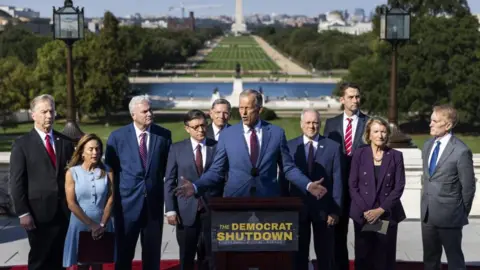
Republicans Make Concessions
Currently, Republicans consider themselves in a dominant position – and are contemplating new ways to escalate consequences experienced by Democrats. But there exists potential that they may be overestimating, and they ultimately become the group who retreat from the precipice.
The GOP has triggered most of the government shutdowns in earlier administrations, and voters could hold them responsible this time, too. Possibly because of history or potentially due to, in their zeal to slash government services and public sector jobs, GOP leadership overplay their hand.
Under these circumstances, GOP leadership offer a form of reasonable commitment to Democrats that they shall assist maintaining the healthcare financial support.
It's not an entirely implausible development, considering that GOP members are presently split over the question of this assistance – which assist their low-income voters in addition to Democrats – should be continued. This represents a accommodation that could, eventually, boost their own election outcomes and mitigate a clear avenue of opposition criticism in the upcoming congressional races.
GOP leadership has stated they won't negotiate with partisan hardliners, but it is possible to find common ground below the overheated rhetoric and bitterness.
Prolonged Closure (Collective Defeat)
Presently, naturally, {overheated rhetoric|inflammatory language|


